

- CAUSES
- –
- –
- 3-min read
Deforestation
Southeast Asia forests include the majority of global tropical peatland forests as well as mangrove forests. The region, however, has some of the highest deforestation rates in the world. There are many drivers of deforestation, in which the most outstanding one can be considered as agricultural development.
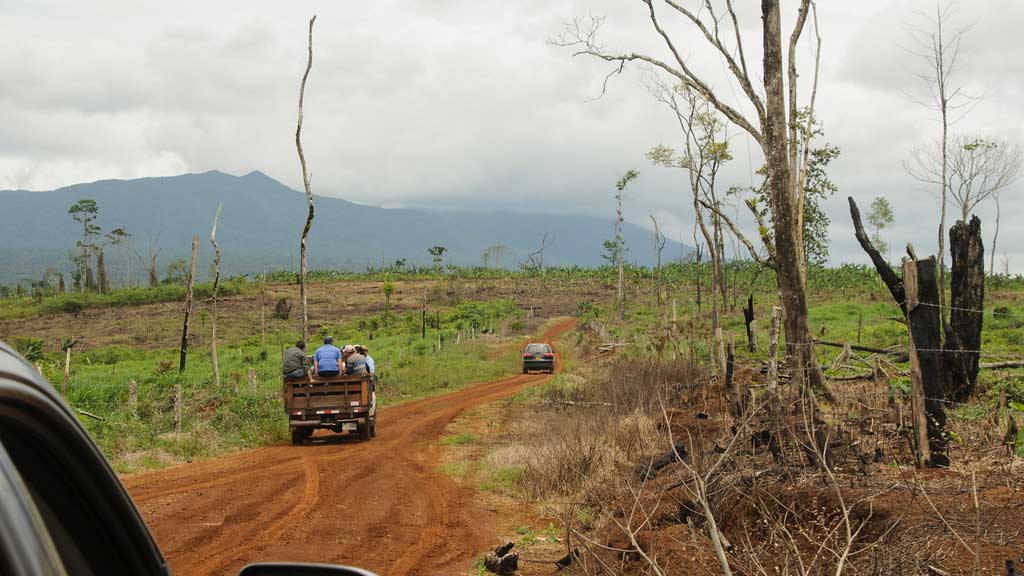
Southeast Asia forests include the majority of global tropical peatland forests as well as mangrove forests. The region, however, has some of the highest deforestation rates in the world, which is estimated at around 14.5% of regional forest cover lost and an average rate of 1% loss annually. From 73% of land covered by forest in 1973, Southeast Asia has witnessed a decline to merely 51% existed by 2019. Deforestation in the Philippines has already removed 93% of the original forest cover, a tragedy in one of the two regions considered both a global biodiversity hotspot and a megadiversity. Other countries such as Thailand, Vietnam, and Myanmar lost between 2% and 4% of their forest cover between 1973 and 2009, while Lao PDR lost 5.29% and Malaysia 14.5%.
There are many drivers of deforestation, in which the most outstanding one can be considered as agricultural development. Southeast Asia is popular for exporting such industrial crops (rubber and oil-palm), fruit, and other agricultural products. Despite playing a key role in generating the region’s economy, agriculture dominants manifold natural forest landscape and increases erosion as well as landslides. Many parts of Southeast Asia is also confronting with “land-grabbing” from large corporations, in which questionable legality of land-ownership deals further lead to direct deforestation within the concession and degradation of surround areas. Furthermore, over the past decades, there has been a progressive increase in the size and populations of Southeast Asia’s cities. The urban population of 1.6 billion people in 2010 equates to approximately 42%, turning 0.88% of the land-surface into urban areas. Urbanization is a part of deforestation causes, which eventually brings out all the normal biotic consequences like increasing pollution, surface run-off, and providing a source of stable populations of potentially invasive species.
The effect of deforestation on biodiversity across Asian is a primary threat to regional biodiversity with the progressive loss of species with habitat loss, and regional endemics, forest-dependent species and large ranging species, in particular, are at high risk of regional extinction from habitat loss. Moreover, the increasing fragmentation of the remaining forest also results in conversion to tree-plantations, coming to the degradation, and increasingly high ratios of edge habitats. Severely lower quality forests, which are due to deterioration and selective logging, retain fewer species at all tropic levels. The majority of species cannot survive in tree-plantations, leading to an almost total loss in native species diversity in the ever-expanding areas of tree-plantations across the Southeast Asian region.